

Hazardous Chemicals Operational Safety & Compliance Management Services

  • Application for [Petroleum Products] Operating License
    立即咨询

    · Diesel

    · Methanol Gasoline

    · Kerosene

    · Petroleum Ether

    · Solvent Oil

    · Gasoline

    · Ethanol Gasoline

    · Crude Oil

    · Naphtha

    · Lubricating Oil

  • Application for [Specialty Gases] Operating License
    立即咨询

    · Hydrogen Cyanide (HCN)

    · Oxygen (O₂)

    · Crude Oil Gas

    · Natural Gas

    · Ammonia (NH₃)

    · Phosgene (COCl₂)

    · Liquefied Petroleum Gas (LPG)

    · Nitrous Oxide (N₂O)

    · Chlorine (Cl₂)

    · Hydrogen (H₂)

    · Biogas

    · Town Gas

  • Application for [Precursor & Explosive Materials] Operating Licens
    立即咨询

    · Bromine (Br₂)

    · Piperidine (C₅H₁₁N)

    · Sulfuric Acid (H₂SO₄)

    · Beta-Butyrolactone (C₄H₆O₂)

    · Chloroform (CHCl₃)

    · Acetone (C₃H₆O)

    · Acetic Anhydride (C₄H₆O₃)

    · Methyl Ethyl Ketone (MEK, C₄H₈O)

    · Hydrochloric Acid (HCl)

    · Potassium Permanganate (KMnO₄)

    · Diethyl Ether (C₄H₁₀O)

    · Toluene (C₇H₈)

  1. Hazardous Chemicals Operating License: Valid for 3 Years
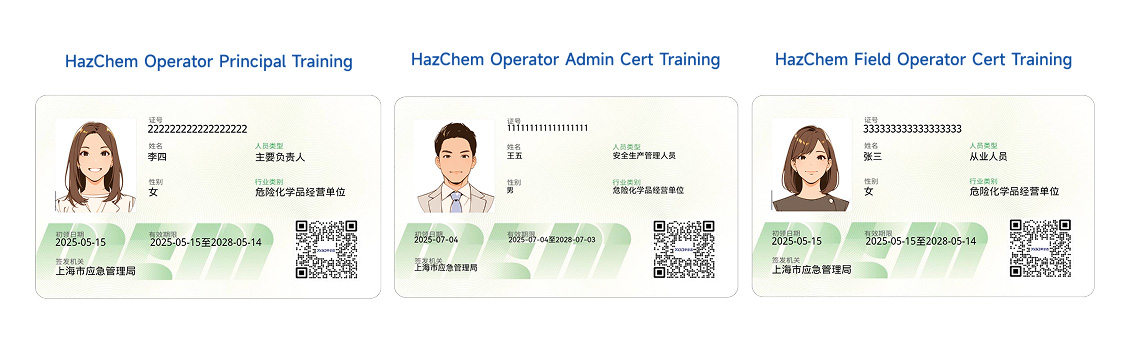
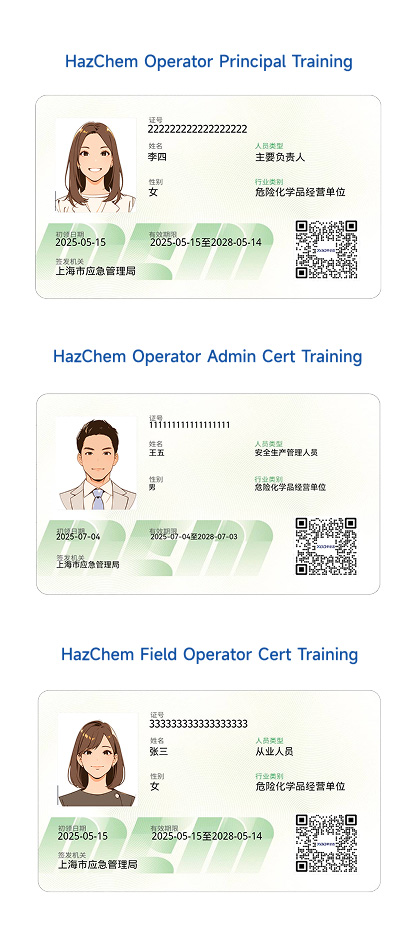
  2. Personnel Qualifications: Key personnel, safety managers, and operators must possess hazardous chemicals safety knowledge and management skills, complete training, and obtain certifications.
  • Types of Changes to Hazardous Chemicals Operating License

    1.Entity Name, Legal Representative, or Registered Address Changes: Submit a change application to the Emergency Management Bureau within 20 working days after updating the Business License.

    2.Reapplication: Required for changes to the licensed business scope or business model; submit a reapplication to the Emergency Management Bureau.

    3.Renewal Application: The 3-year validity period mandates submitting a renewal application 3 months before expiration.

    4.Cancellation Application: Required for entities ceasing operations, prolonged inactivity, unreachable status, or failure to renew on time.

  • Permissible Chemical Categories under Hazardous Chemicals Operating License

    1.General Products: Phenylacetylene, Pyridine, Isopropyl Alcohol, Propane, Propylene, Calcium Hypochlorite, Butyric Anhydride, etc.

    2.Petroleum Products: Diesel, Methanol Gasoline, Kerosene, Petroleum Ether, Solvent Oil Naphtha, Lubricating Oil, etc.

    3.Specialty Gases: Natural Gas, Crude Oil Gas, Oxygen, Hydrogen Cyanide, Ammonia, Hydrogen, Phosgene, etc.

    4.Precursor & Explosive Materials: Bromine, Piperidine, Chloroform, Acetone, Sulfuric Acid, Butyrolactone, Diethyl Ether, Acetic Anhydride, Toluene, Methyl Ethyl Ketone, Hydrochloric Acid, Potassium Permanganate, etc.


  1. Hazardous Chemicals Registration Certificate: Valid for 3 Years.
  2. Scope: Importers must complete hazardous chemicals registration before initial import.
  • Amendments to Hazardous Chemicals Registration Certificate

    1.Corporate Information Changes: Entity name, registered address, registered products, or emergency contact changes require submitting an amendment application to the Registration Office within 15 working days.

    2.New Hazard Characteristics: Changes in chemical properties with newly identified hazards for produced/imported chemicals require submitting an amendment application within 15 working days.

    3.Renewal Process: The 3-year validity period mandates submitting a renewal application 3 months before expiration if continued hazardous chemical imports are planned.

  • 24/7 Emergency Contact Requirements

    1.SDS & Safety Labels: Must display a 24-hour emergency hotline.

    2.Registration Agencies: Providing delegated emergency consultation services must establish a domestic fixed-line service phone staffed by full-time personnel on 24/7 duty, maintain a comprehensive chemical emergency response database, equipped with online digital recording systems, and at least 8 qualified personnel capable of handling 3+ concurrent emergency consultations, ensuring accurate information and recommendations for chemical spills, fires, explosions, and poisoning incidents.

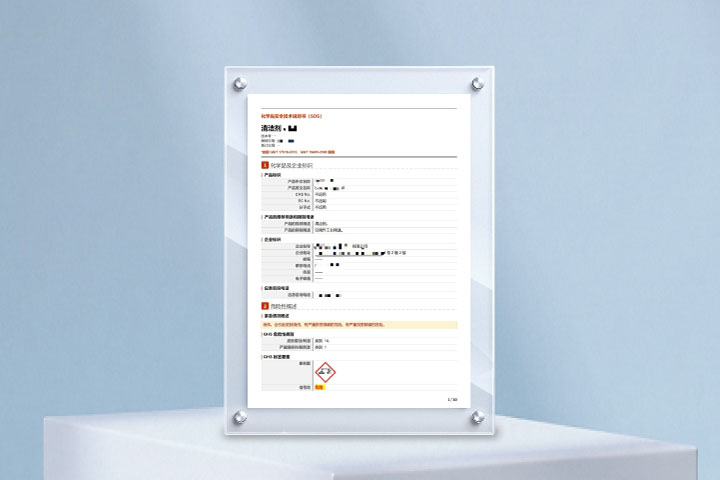
  1. SDS Scope: A comprehensive legal document provided by chemical producers, traders, and distributors to downstream customers and the public per regulatory requirements.
  2. SDS Validity: Must be fully revised every 5 years, ensuring accuracy and timeliness.
  • 16 SDS Sections
    1. · Chemical & Company ID

      · Fire-fighting Measures

      · Transport Information

      · Hazard Identification

      · Handling & Storage

    2. · Toxicological Info

      · Composition

      · Exposure Control/PPE

      · Ecological Info

      · Physical & Chemical Properties

    3. · Stability & Reactivity

      · Regulatory Info

      · First Aid Measures

      · Disposal

      · Other Information

  • Label Validity

    1.Matches SDS validity; update label upon SDS revision.

    2.Content (chemical name, pictograms, signal word, hazard statements, precautionary measures, emergency contact, supplier ID, reference note) must align with SDS.

  1. Filing Content:Report product, quantity & flow to public security authorities within 30 workdays of precursor chemical sales.
  2. Filing Validity:3-year validity; apply for renewal 3 months before expiration.
  • Non-Pharma Precursor Chemicals: 3 Categories

    1.Cat.1: Primary materials for drug production; license required

    2.Cat.2&3: Chemical reagents for drug production; registration required

  • Types of Changes

    1.Re-application: For name/address/legal rep changes; refile within 30 workdays after license update; original validity unchanged

    2.Product Changes: For product additions or flow direction changes; refile within 30 workdays

    3.Extension: Apply 3 months before 3-year validity expiration

    4.Cancellation: Process within 3 months of termination for discontinued operations or long-term inactivity

  • Important Notes

    ·Permit Requirement: Purchase drug-making precursors with Dangerous Chemicals Operation Permit plus legitimate purpose statement

    ·Operations: Establish explosive precursor account with local public security authorities, complete declarations, and maintain accurate records

  • Authorized Buyers

    ·Manufacturers: Work Safety Permit

    ·End Users: Explosive Precursor Purchase Permit (purpose: "experimental research")

    ·Trading Companies: Dangerous Chemicals Operation Permit

  • Sales Restrictions

    ·No sales to individuals (including individual businesses)

    ·No sales to entities without purchase permits/filing certificates; no exceeding permitted varieties/quantities

    ·No retail sales via e-commerce platforms

    ·No fractional sales

  1. Scope: All catalog items require import/export licenses
  2. Changes: Void & reapply for spec/quantity/end-user changes
  3. Policy: "Not one license per shipment" & "one license per customs"
  1. Samples: Commercial/test samples require full import/export licenses
  2. Validity: Max 1 year; cross-year licenses expire March 31 next year
  3. Export Policy: "One license per shipment" & "one license per customs"
  • Comprehensive Emergency Plan

    Master plan for production/operation units to handle all work safety accidents.Outlines overall procedures, measures and emergency response framework.Universally applicable to all accident types.

  • Specialized Emergency Plan

    ·Targeted plan for specific accident types or critical facilities/hazards/activities

    ·Developed by production/operation entities for accident prevention

    ·Applies to ongoing incidents not yet resolved on-site

  • On-site Response Plan

    ·Site-specific emergency measures for particular equipment/facilities

    ·Developed by production/operation units for specific accident scenarios

    ·Limited applicability to designated scenarios

  • Dual Control System: Risk Management + Hazard Control

    ·Risk Levels: 4-tier system - Red (Major), Orange (Significant), Yellow (General), Blue (Low)

    ·Classification Standard: Shanghai Guide - Levels A (Red), B (Orange), C (Yellow), D (Blue)

    ·Process: Risk ranking by attention required based on assessment results

  • Hazard Identification: Checklist with rectification measures, responsible persons, deadlines

    Legal Requirement: PRC Work Safety Law Art.41: Establish risk classification system and implement corresponding control measures

Attention needed for filling mechanism
  • 01

    Hazardous Chemical Packaging Compliance ,Must meet national laws, regulations and standards ,Materials, forms, specs, methods and unit mass must match chemical properties and intended use

  • 02

    Hazardous Chemicals Compliance ,Follow permit procedures; obtain all required qualifications ,Management & staff must complete training and obtain certification

  • 03

    Work Safety Compliance ,Hazardous material containers/transport tools must be professionally manufactured per regulations ,Require inspection/certification by qualified agencies ,Must obtain safety use certificate or safety mark。

Hazardous Waste Collection Principles
  • 01

    Lab Waste Management
    No random disposal/pouring/spilling of lab waste
    Immediately collect all hazardous experimental waste
    Equipment cleaning water must go to waste containers only
    Never pour into sinks, drains or restrooms
    Promptly handle all accidental spills

  • 02

    Waste Collection by Hazard Class.
    Collect according to hazard characteristics.
    School-provided containers with verified hazardous waste labels.
    All expired reagents follow scrapping procedures.

  • 03

    Waste Management Records

    ·Disposal register required per container

    ·Document: name, type, time, quantity, destination

    ·Retain records minimum 5 years

  • 04

    Waste Liquid Storage Control

    ·Strictly control barrel waste liquid quantities

    ·Large barrels: maintain fill level at approximately 2/3

    ·Maximum fill level must not exceed 4/5

  • 05

    Empty Bottle Handling

    ·Empty bottles must not contain waste liquid before proper decontamination

    ·Follow established procedures for empty reagent bottle recycling and disposal

  • Analytical reagents

    01

    ·Xylene

    ·Dichloromethane

    ·Ethyl acetate

    ·Methanol

    ·Anhydrous ethanol

    ·Petroleum ether

    ·Isopropanol

    ·Acetonitrile

  • High-purity reagent

    02

    ·HPLC grade

    ·Preparation grade

    ·LC/MS level

  • Electronic-grade wet chemicals

    03

    ·Sulfuric acid

    ·1,4-Dioxane

    ·n-Hexane

    ·Tetrahydrofuran

    ·Nitric acid

    ·4-tert-Butoxystyrene

    ·n-Heptane

    ·Styrene

  • Semiconductor chemicals

    04

    ·Etchant

    ·Developer

    ·OK73

  • Biological Reagents and Laboratory Consumables

    05

    ·Laboratory Glassware

    ·Biological Consumables

    ·Biochemical Reagents and Cell Culture Materials

  • Enterprises Requiring Mandatory Safety Assessment

    ·Mining Enterprises: Coal mines and metallic/non-metallic mines require assessment during construction and production phases per Mine Safety Law

    ·Hazardous Chemicals Enterprises: Production, storage, transportation or use facilities must undergo assessment when involving major hazard sources

    ·Metal Smelting Enterprises: Metallurgy and casting construction projects require safety pre-assessment and acceptance assessment

    ·Fireworks Enterprises: Production and storage facilities require mandatory safety pre-assessment

    ·Construction Enterprises: High-risk construction projects require safety assessment, particularly for major engineering works

  • Safety Evaluation Considerations

    ·Applicable to production and operation units (factories, mines, gas stations, etc.)

    ·Evaluation scope includes existing production facilities, equipment, devices and safety management systems

    ·Purpose: Assess compliance with national laws, regulations and standards; provide improvement recommendations

    ·Key applications: Safety production license renewal, compliance inspections, and post-accident rectification measures

  1. ISO9001 Quality Management System: Applicable to all industries, especially manufacturing, service sectors (software development, logistics), and supply chain enterprises
  2. ISO14001 Environmental Management System: Suited for high-energy manufacturing (chemical, metallurgy), export-oriented companies, and ESG-focused brands
  3. ISO45001 Occupational Health and Safety System: Essential for high-risk industries (construction, mining, machinery manufacturing) and large labor-intensive enterprises
  4. ISO22000 Food Safety Management System: Designed for food processing, catering services, and packaging companies
  1. IATF 16949 Automotive Quality Management System: Mandatory certification for automotive parts suppliers, focusing on supply chain collaboration and defect prevention
  2. ISO13485 Medical Device Quality Management System: Compliance requirement for medical device manufacturers and distributors, ensuring product safety and traceability
  3. ISO27001 Information Security Management System: Essential for finance, IT services, e-commerce and other information technology-dependent industries
  4. ISO50001 Energy Management System: Designed for high-energy consumption enterprises (data centers, heavy industry) and organizations with clear carbon reduction targets
  5. ISO20000 IT Service Management System: Specifically applicable to IT outsourcing companies and internet enterprises
  • Comprehensive Emergency Plan

    ·A general work plan developed by production and operation units to address various safety accidents

    ·Serves as the master framework for overall response procedures, measures and emergency systems

    ·Applicable to all accident types as the foundational emergency response document

  • Specialized Emergency Response Plan

    ·Targeted work plans developed by production/operation units for specific accident types or critical scenarios

    ·Focuses on important production facilities, major hazard sources, or significant activities

    ·Applicable to accidents requiring response beyond initial on-site handling measures

  • On-site Emergency Response Plan

    ·Immediate response measures developed by production/operation units for specific accident types

    ·Tailored to particular locations, equipment or facilities

    ·Applicable to accidents requiring immediate on-site intervention in specific scenarios

  • "Double Control" refers to Risk Classification Control + Hidden Danger Investigation and Treatment

    1.Risk Classification Levels

    ·Four-tier system based on hazard severity:

    A. Red Level (Major Risk)

    B. Orange Level (Significant Risk)

    C. Yellow Level (General Risk)

    D. Blue Level (Low Risk)

    2.Legal Basis

    ·According to "Shanghai Enterprise Safety Risk Classification Control Implementation Guidelines" (Section 8)

    ·Risk classification is the process of ranking risks based on required attention levels following risk assessment

    ·Risks are categorized from highest to lowest as A-level (Red), B-level (Orange), C-level (Yellow), and D-level (Blue)

  • Hidden Danger Investigation

    1.Hidden Danger Investigation

    ·Establish comprehensive checklists with clearly defined rectification measures, responsible persons, and deadlines.

    2.Legal Basis

    ·Article 41 of the "People's Republic of China Work Safety Law" mandates that production and operation units establish safety risk classification control systems and implement corresponding control measures according to risk levels.

  1. Validity Period: 3 years
  2. Personnel Requirements: Main responsible persons, safety managers, and operators must possess relevant hazardous chemicals safety knowledge and management capabilities, complete mandatory training, pass assessments, and obtain appropriate qualification certificates
  • Types of Hazardous Chemicals Operation License Changes

    1.Company Information Changes: Submit change application to Emergency Management Bureau within 20 working days after modifying business license (for company name, legal representative, or registered address changes)

    2.Re-application: Required when changing licensed business scope or operation methods

    3.Renewal Application: Submit 3 months before the 3-year license expiration date

    4.Cancellation Application: Mandatory for businesses ceasing operations, with long-term inactivity, lost contact status, or failure to renew on time

  • Applicable Chemicals for Hazardous Chemicals Operation License

    1.General Products: Phenylacetylene, Pyridine, Isopropanol, Propane, Propylene, Calcium hypochlorite, Butyric anhydride, etc.

    2.Refined Oil Products: Diesel, Methanol gasoline, Kerosene, Petroleum ether, Naphtha, Lubricating oil, etc.

    3.Specialty Gases: Natural gas, Petroleum gas, Oxygen, Cyanogen, Ammonia, Hydrogen, Phosgene, etc.

    4.Precursor Chemicals: Bromine, Piperidine, Chloroform, Acetone, Sulfuric acid, Butyrolactone, Diethyl ether, Acetic anhydride, Toluene, MEK, Hydrochloric acid, Potassium permanganate, etc.

  1. Validity Period: 3 years
  2. Application Scope: Import enterprises must complete registration before first import of hazardous chemicals
  • Circumstances Requiring Hazardous Chemicals Registration Certificate Changes

    1.Enterprise Information Changes: Submit change application within 15 working days for modifications to company name, registered address, registered varieties, or emergency contact nmber

    2.New Hazardous Properties: Submit change application within 15 working days when produced/imported chemicals exhibit new hazardous characteritics

    3.Certificate Renewal: Valid for 3 years; submit renewal application three months before expiration if continuing hazardous chemicals operations

  • 24-Hour Emergency Telephone Requirements

    1.SDS and safety labels must display a 24-hour emergency consultation service telephone number

    2.Designated emergency consultation agencies must maintain:
    Domestic fixed-line telephone with dedicated 24-hour staffing
    Comprehensive chemical emergency response database
    Digital recording equipment and minimum 8 professional staff members
    Capacity to simultaneously handle 3+ emergency consultations
    Ability to provide accurate guidance for chemical leaks, fires, explosions, poisoning and other emergency scenarios

  1. Scope: All catalog items require import/export licenses
  2. Changes: Void & reapply for spec/quantity/end-user changes
  3. Policy: "Not one license per shipment" & "one license per customs"
  1. Samples: Commercial/test samples require full import/export licenses
  2. Validity: Max 1 year; cross-year licenses expire March 31 next year
  3. Export Policy: "One license per shipment" & "one license per customs"
  1. SDS Applicability: Comprehensive legal document that chemical manufacturers, traders, and sales enterprises must provide to downstream customers and the public per regulatory requirements
  2. SDS Validity Period: Requires comprehensive update and revision every five years to ensure content accuracy and timeliness
  • The 16 sections included in SDS
    1. · Chemical and company identification

      · Hazard Overview

      · Ingredients/Composition information

      · Physicochemical properties

      · First aid measures

    2. · fire prevention measures

      · Handling, disposal, and storage

      · Exposure control and personal protection

      · Stability and reactivity

      · disposal of waste

    3. · Shipping Information

      · Toxicological Information

      · ecological information

      · Regulatory Information

      · Other information

  • Chemical Label Requirements

    1.Validity Period: Aligned with SDS validity; requires synchronous update whenever SDS is revised

    2.Content Requirements: Must include chemical name, pictograms, signal words, hazard statements, precautionary measures, emergency contact number, supplier identification, and reference statements, all consistent with corresponding SDS information

  1. Content Requirements: File product details, quantities, and distribution information with public security authorities within 30 working days of sale.
  2. Certificate Validity: 3-year validity period; submit renewal application to management department 3 months before expiration.
  • Non-pharmaceutical precursors are categorized into three classes

    1.Class I: Primary drug production ingredients under licensing.

    2.Classes II & III: Chemical reagents for drug production under filing.

  • Change Types

    1.Reapplication: Re-file within 30 business days post-license update for name/address/legal rep changes (original validity unchanged).

    2.Product change: Re-file within 30 business days for new items/flow changes.

    3.Extension: Apply 3 months pre-expiry (3-year validity).

    4.Cancellation: Cancel within 3 months of ceasing non-pharma precursor ops or prolonged inactivity.

  1. Filing: Report product/quantity/flow to public security authorities within 30 business days post-sale.
  2. Validity: 3-year certificate; renew 3 months pre-expiry.
  • Non-pharmaceutical precursors are categorized into three classes

    1.Class I: Primary drug production ingredients under licensing.

    2.Classes II & III: Chemical reagents for drug production under filing.

  • Change Types

    1.Reapplication: Re-file within 30 business days post-license update for name/address/legal rep changes (original validity unchanged).

    2.Product change: Re-file within 30 business days for new items/flow changes.

    3.Extension: Apply 3 months pre-expiry (3-year validity).

    4.Cancellation: Cancel within 3 months of ceasing non-pharma precursor ops or prolonged inactivity.

  • Notes

    ·Licensing: Purchase drug precursors with Hazardous Chemicals License + legal use proof during explosive precursor handling.

    ·Operations: Register explosive precursor account with local PSB; file reports and accurately log data.

  • Legal sales targets

    ·Mfrs: Work Safety Permit.

    ·Users: Explosive precursors permit + "R&D use" label.

    ·Traders: HazChem Operation License.

  • Prohibited Sales

    ·Individuals (incl. sole props).

    ·Unpermitted entities or over-limit transactions.

    ·E-commerce retail.

    ·Bulk-breaking.

  • HazChem Fundamentals

    ·HazChem Def/Class

    ·Storage/Transit Safety

    ·Safe Handling Procedures

    ·Incident Emergency Response

    ·HazChem vs. DG Distinction

  • Regulatory Analysis

    ·HazChem Safety Regs (Partial)

    ·Shanghai HazChem Safety Regs (Partial)

    ·HazChem Registration Measures (Partial)

    ·HazChem License Admin Measures (Partial)

    ·2015 HazChem Catalogue Analysis

  • Compliance operation

    ·HazChem Product Pre-classification

    ·SDS & Label Assessment Criticality

  • Precursor Compliance Management

    ·Regulatory & Standard Requirements

    ·Fundamentals & Classification

    ·Purchase/Transit Filing

    ·Storage/Transit Safety Protocols

  • Explosive Precursors

    ·Regulatory & Standard Requirements

    ·Fundamentals & Classification

    ·Purchase/Transit Filing

    ·Storage/Transit Safety Protocols

  • import and export

    ·HazChem I/E End-to-End Process & Cases

    ·Dual-Use License Training & Precautions

  • Specialized Training

    ·Safety ERP Mgmt Measures (Partial)

    ·Safety ERP & Drills Training

    ·Personnel Safety Training

    ·Lab HazChem Safety

    ·Shanghai Lab HazChem Std

    ·GB/T 15346 Packaging Analysis

    ·HazChem LQ/EQ Exemption

  • Exemption Analysis

    ·DG LQ Policy & Implementation

    ·DG EQ Policy & Implementation

  • Eligibility Requirements

    1.Staff: 1 Manager w/ agronomy/plant protection/pesticide diploma or 56hr cert

    2.Premises:

    ·Biz area >30m², storage >50m², isolated from goods/living/water.

    ·Ventilation, fire safety, protection & traceability scanners.

    3.Management: Incoming inspection, records, safety & warehouse protocols.

  • Special RUP Requirements

    ·+1 Tech Staff w/ >2yr Exp

    ·Marked RUP Counter & Safety Facilities

    ·No Online RUP Sales

  • License Mgmt

    ·5yr Validity; Renew 90d Pre-expiry

    ·Changes/Branches: Item amendments required; Branch filing (no new license)

Licensing & Certifications

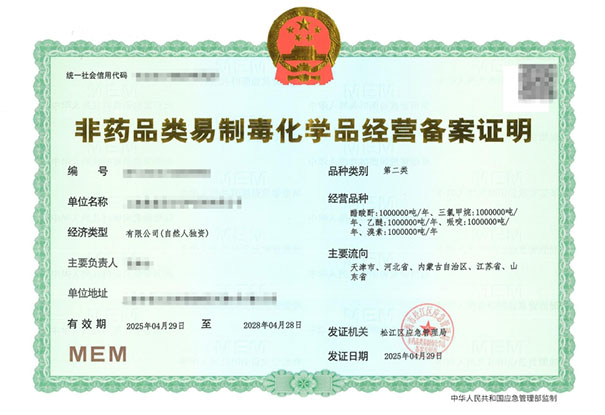
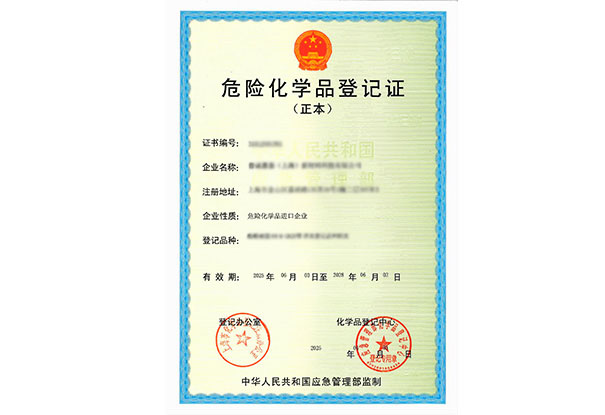
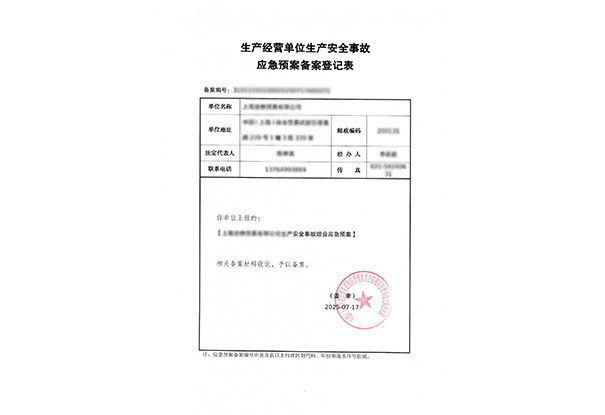
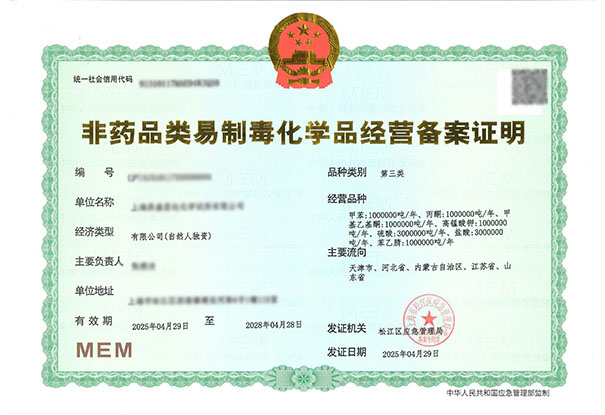
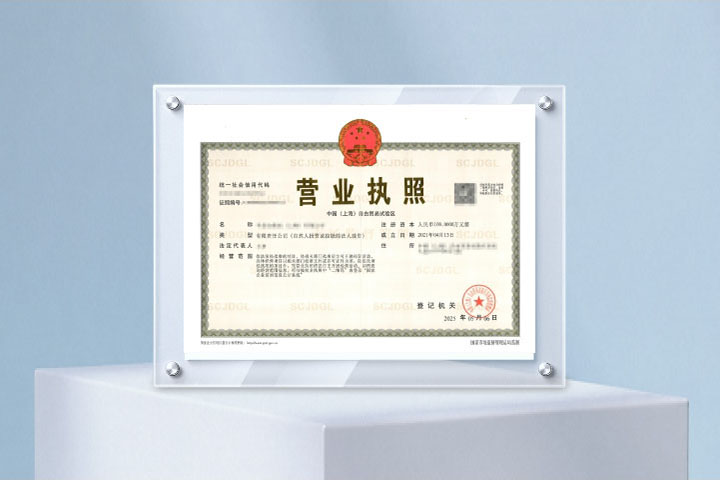
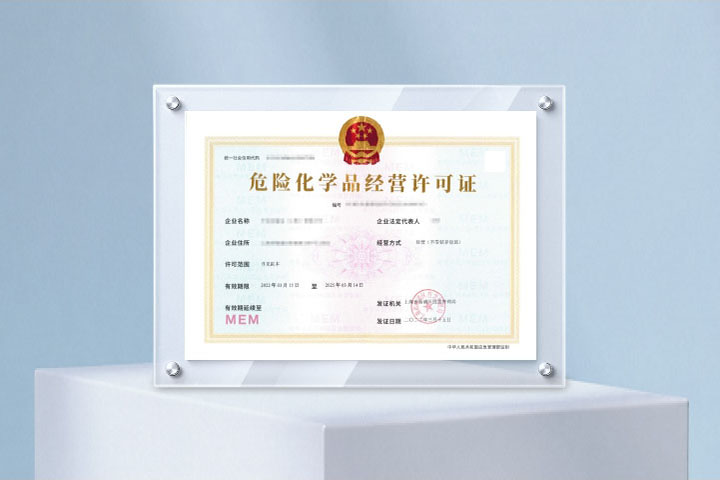
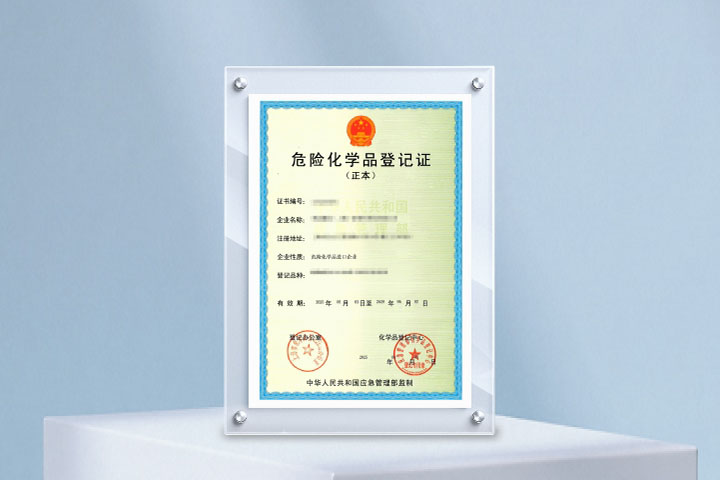
Upon completion of your service, you will receive a full set of compliance licenses and certifications.

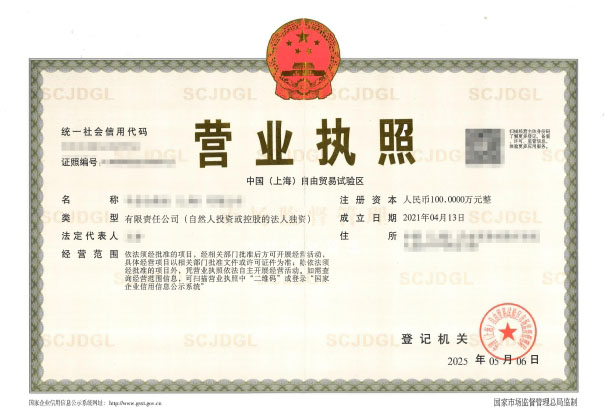
营业执照

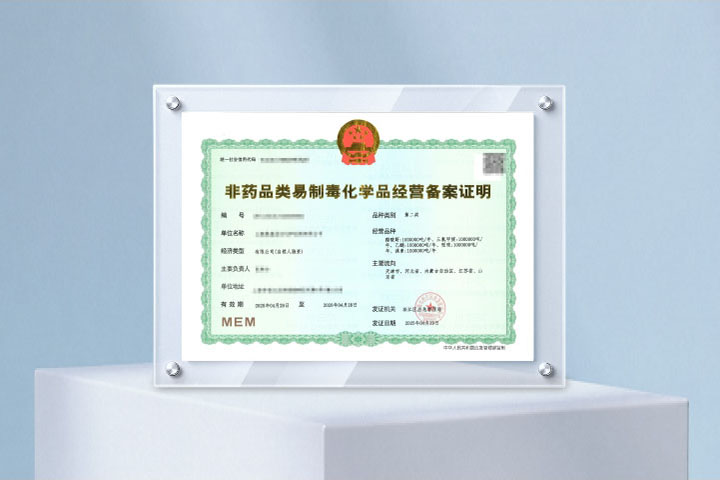
二类易制毒备案

危化品登记证

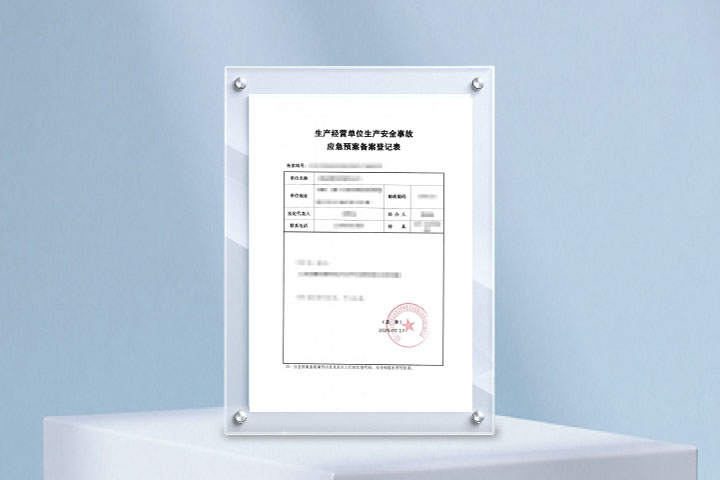
应急预案备案登记表

三类易制毒备案

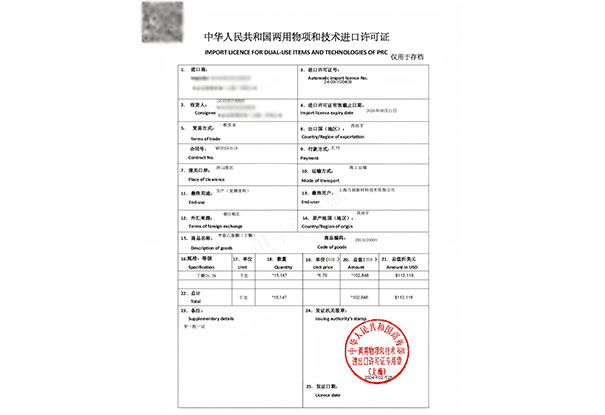
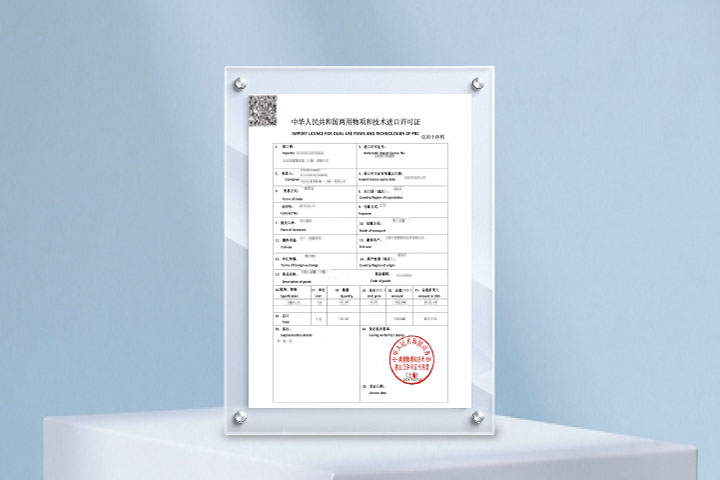
两用物项进口许可证

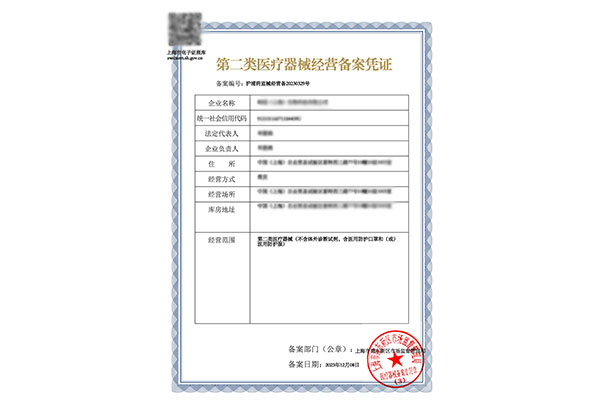
二类医疗器械备案

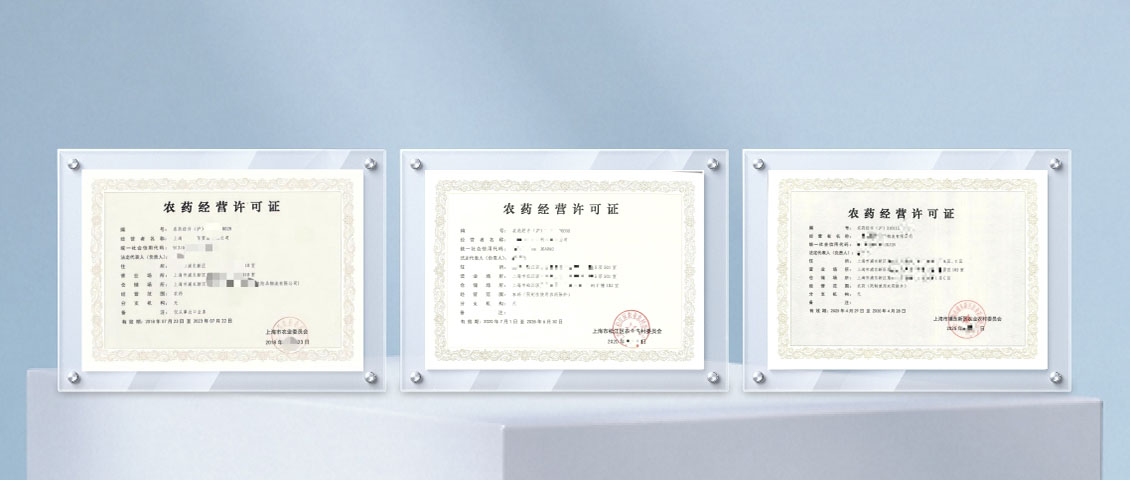
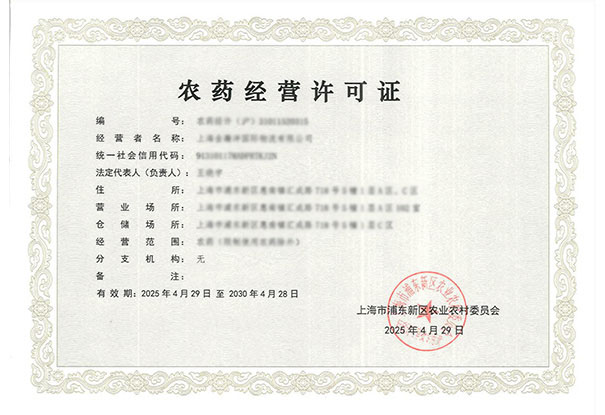
农药经营许可证

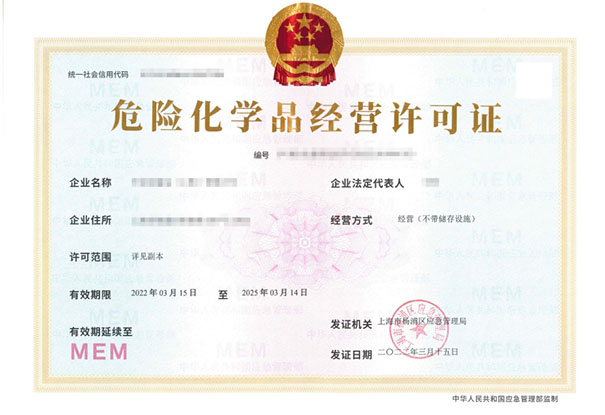
危化品经营许可证

Sindbad Academy

Legal & Regulatory Compliance

危险化学品经营许可证管理办法(国家安全生产监督管理总局令 - 第55号)

《危险化学品经营许可证管理办法》已经 2012 年 5 月 21 日 国家安全生产监督管理总局局长办公会议审议通过,现予公布,自 2012 年 9 月 1 日起 施行

2021-10-08

Learn more

危险化学品经营许可证管理办法(国家安全生产监督管理总局令 - 第55号)

《危险化学品经营许可证管理办法》已经 2012 年 5 月 21 日 国家安全生产监督管理总局局长办公会议审议通过,现予公布,自 2012 年 9 月 1 日起 施行

2021-10-08

Learn more

上海市危险化学品安全管理办法 - 上海市人民政府令第44号

《危险化学品经营许可证管理办法》已经 2012 年 5 月 21 日 国家安全生产监督管理总局局长办公会议审议通过,现予公布,自 2012 年 9 月 1 日起 施行

2021-10-08

Learn more

使用危化品需要申报,您知道吗?

《危险化学品经营许可证管理办法》已经 2012 年 5 月 21 日 国家安全生产监督管理总局局长办公会议审议通过,现予公布,自 2012 年 9 月 1 日起 施行

2021-10-08

Learn more

危险化学品经营许可证管理办法(国家安全生产监督管理总局令 - 第55号)

《危险化学品经营许可证管理办法》已经 2012 年 5 月 21 日 国家安全生产监督管理总局局长办公会议审议通过,现予公布,自 2012 年 9 月 1 日起 施行

2021-10-08

Learn more

危险化学品经营许可证管理办法(国家安全生产监督管理总局令 - 第55号)

《危险化学品经营许可证管理办法》已经 2012 年 5 月 21 日 国家安全生产监督管理总局局长办公会议审议通过,现予公布,自 2012 年 9 月 1 日起 施行

2021-10-08

Learn more

上海市危险化学品安全管理办法 - 上海市人民政府令第44号

《危险化学品经营许可证管理办法》已经 2012 年 5 月 21 日 国家安全生产监督管理总局局长办公会议审议通过,现予公布,自 2012 年 9 月 1 日起 施行

2021-10-08

Learn more

使用危化品需要申报,您知道吗?

《危险化学品经营许可证管理办法》已经 2012 年 5 月 21 日 国家安全生产监督管理总局局长办公会议审议通过,现予公布,自 2012 年 9 月 1 日起 施行

2021-10-08

Learn more